
A new way to treat blood cancers: combining the power of gene editing and immune therpy
A new biotech enters the scene with support from Nobel laureate Dr. Jennifer Doudna

Blood cancers are really difficult to treat. They include cancers like leukemia, lymphoma, and myeloma and generally affect the bone marrow, blood cells, lymph nodes and other parts of the lymphatic system. The complexity of the blood and its interactions with both the lymphatic and the immune system means it’s hard to target a cancer specifically and efficiently. The lymphatic system helps to regulate your fluid balance, absorb of dietary fats, and enhance the immune system. Blood cancers circulate throughout the patient’s body and occupy the lymphatic system – they can’t be surgically removed like solid tumours.
The first line of treatments for patients with blood cancer is usually chemotherapy, but patients can also be treated with monoclonal antibodies, immune modulating drugs or other inhibitors. In the 1990s, researchers developed CAR T cell therapy which employs the body’s own immune system to fight against blood cancer. However, CAR T cell therapy has vulnerabilities both physiologically and logistically. Today, I’m going to discuss a new biotech and its potential to help address the challenges of the currently available CAR T cell therapy.
A brief overview of the immune system
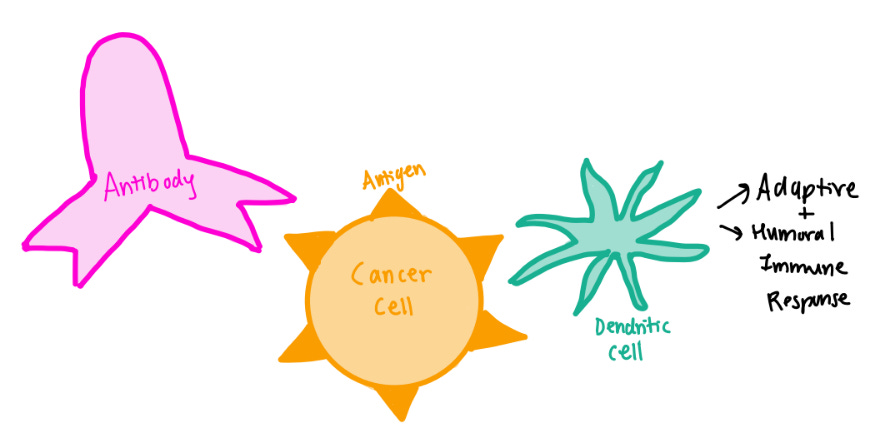
To first understand T cells, let’s go through a quick crash-course on the immune system. The immune system consists of two parts ➡️ innate + adaptive. The innate immune system is the first to respond to invasive or foreign cells like cancers. On the surfaces of these foreign cells are antigens, small proteins that are recognized by dendritic cells. These dendritic cells send the antigen information to start the adaptive and humoral immune responses.
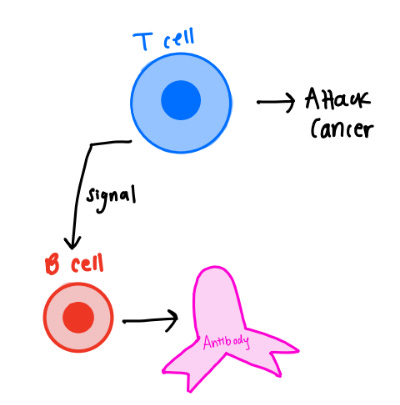
The dendritic cells present their information to T cells. A specific subset of these T cells signals to the B cells that will eventually create antibodies. While the dendritic cells are master regulators of the immune response and link the location of foreign cells to the innate immune system, the antibodies hold the memory to continue protecting the body.
Essentially, after T cells receive the necessary information from dendritic cells, they can recognize antigens of cancers and activate other areas of the immune system to destroy the cancer.
Back to the issue at hand – what are T cells and what does CAR stand for?
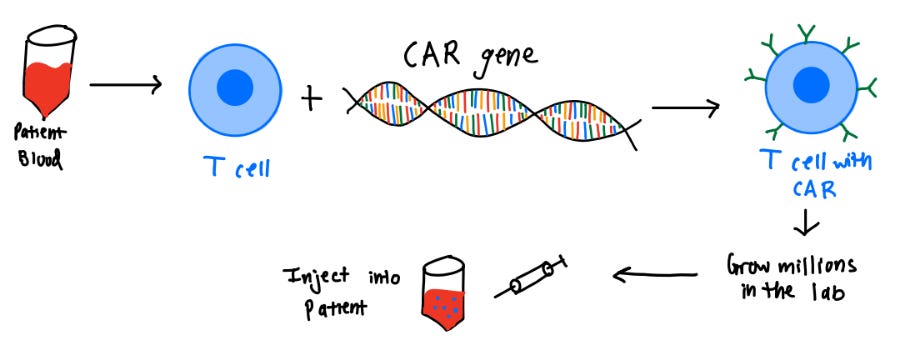
In 1993, the first generation of Chimeric Antigen Receptor (CAR) T cells were developed as drugs to kill cancer cells by fusing T cells with a portion of an antibody – the primary cell of your immune system. These CAR T cells can recognize specific antigens on the surface of cancer cells; either CD19 or BCMA depending on the blood cancer type. How does this work in the clinic? As a cancer patient, your white blood cells, including your T cells, would be extracted and modified in a lab by adding the gene for CAR, and then finally added back into your bloodstream.
These T cells are engineered to become more efficient against cancers with the introduction of the CAR gene, and they continue multiplying to create a long-term supply of cancer killing CAR T cells. Currently, CAR T-cell therapy is used to treat multiple myeloma (MM), B cell leukemia, and lymphoma to name a few.
CAR T cell therapies are costly and can become ineffective
Unfortunately, these CAR T cell therapies do have their own set of problems. The most worrying of these for patients and doctors alike is the relapse of the tumor after CAR T therapy. This happens when the tumor evolves to have less of the antigen on its surface meaning it is not recognized as well by T cells. Scientists have also discovered a phenomenon called T cell exhaustion, where CAR T cells lose their ability to kill cancer.
CAR T cell therapies are inaccessible for most people. There are only 3 sites in Ontario and 200 centres in the United States which means that the wait time is long for patients. Furthermore, the manufacturing process of CAR T cells is lengthy and quite expensive. These logistical and biological limitations hold back the potential of CAR T cell therapies to treat the majority of patients with blood cancers. Enter in vivo CAR T cell therapy.
In vivo CAR T cell therapy lets your body take over the manufacturing part
To circumvent the limitations of CAR T cell therapy, scientists asked if the body could become the CAR T cell machine. In other words, could we alter T cells inside the body instead of in the lab? Work from the lab of Dr. Jennifer Doudna, one of the developers of the CRISPR-cas9 system and a Nobel laureate, as well as Azalea Therapeutics ,spearheaded by a former postdoc, are striving to make in vivo CAR T cell therapy a clinical option.
The Doudna Lab recently showed that they can use cas9 packaged in enveloped delivery vehicles (Cas9-EDVs), which are virus like particles enclosing the cas9 gene editor with antibody fragments, to target T cells. These EDVs use antibody-antigen recognition interactions to deliver the cas9 genome editor to T cells for a brief moment of time. Azalea Therapeutics also combined forces with another research team that had succeeded in using a different another delivery type called adeno-associated virus (AAV). With this method they were able to direct a CAR gene to a specific location in the T cell genome receptor alpha constant (TRAC) locus (locus being a fancy term for location in the genome).
Basically, Azalea’s potential therapeutic has two components: an EDV and an AAV. The EDV delivers the CRISPR-cas9 system to insert the CAR gene while the AAV delivers the template to ensure site-specific gene insertion at the T cell itself. Think of the cas9 system as the tools to fix a broken table while the AAV system is the instruction manual. The AAV system keeps the therapy in check and ensures that only T cells are getting the CAR gene at the specific genomic locus. This ensures a low number of off-target effects and increases the potency of the therapeutic.
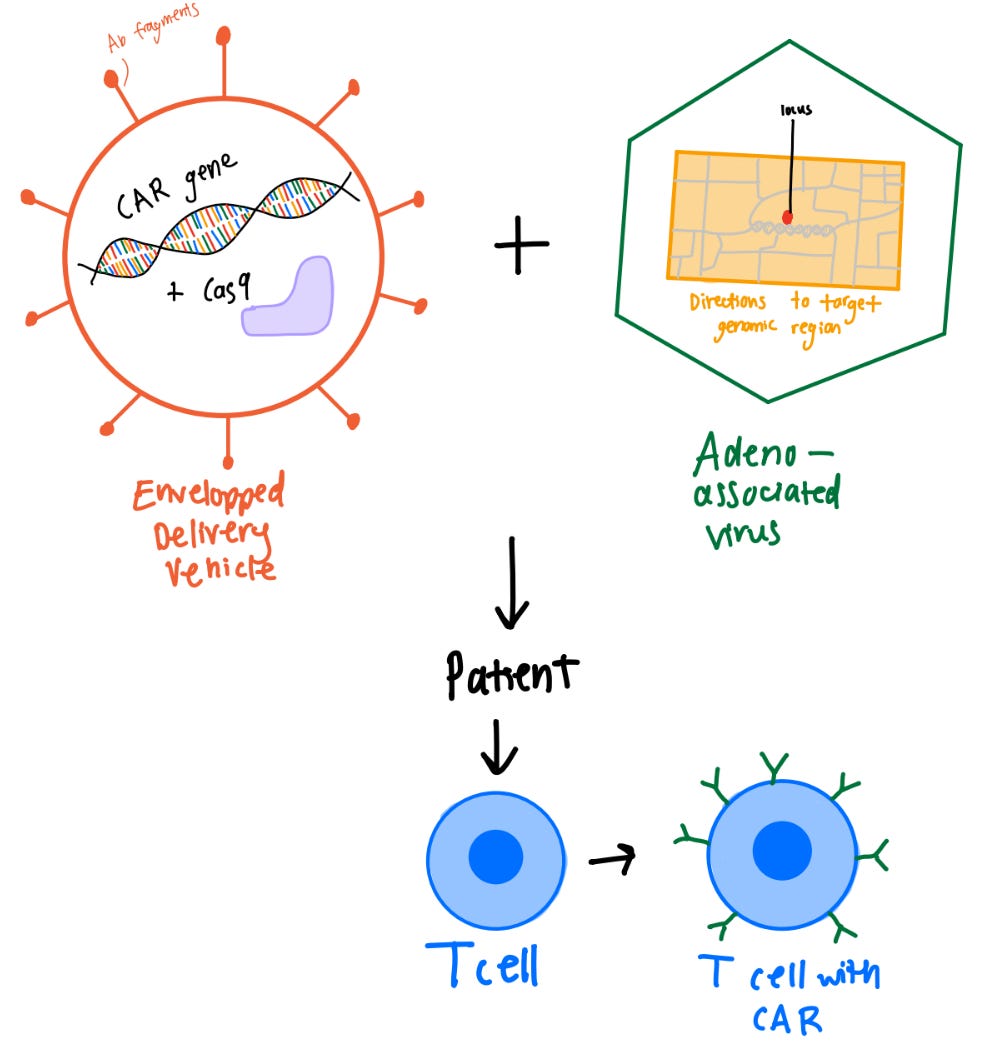
The preliminary data from both teams shows that an AAV delivery can cause CAR expression in peripheral T cells and enhances T-cell potency in human blood while the EDVs correctly insert a CAR gene into humanized mouse T cells. With these accomplishments, Azalea is the first biotech company to allow for precise genome editing in a living human with both a cell-specific delivery and at a genomic specific location.
The future looks bright for Azalea Therapeutics as they opened with $82 million USD in funding. They also hope to target other cancer types in the future. It’s a really exciting time in the immune and gene editing worlds right now, and I’m excited to keep up with the news from this company!
I hope you enjoyed this article, and let me know what you think about Azalea’s plans and current scientific progress in the comments!
Blood cancer is a different beast, thanks for the explanation. Have relatives who have died from myeloma and lymphoma and the complexity of the cancer was further elevated, due to other cancers and debilitating diseases.
Yes very sad, I had 2 relatives die from blood cancer. Thanks for explaining these new breakthroughs! I'm not a medical scientist, so this is very interesting.