
Here's to the Last Failed Drug
Canadian stories of AI-powered drug discovery and repurposing

What goes into designing a drug? For one set of patients, scientists spend years finding a target that causes disease symptoms and can be reached by therapeutics. Then, biotech and pharma spend years developing a molecule that modulates the identified target and is effective in cells in a dish or in mice. Finally, the molecule is initially tested in humans for toxic side effects, and then for effectiveness in patients. The new drug is compared to existing treatments or a placebo. Only 10% of drugs that start in clinical trials make it to patients.
In many cases, drugs only fail in the last phase of clinical trials after millions of dollars and years of work. How could AI be used to decrease the upfront time and cost of developing new drugs, or to repurpose “failed” drugs?
In today’s blog I’ll be discussing two Canadian stories of specific AI usage in clinical trials. We begin our story in Vancouver.
Variational AI
In the fall of 2025, Variational AI signed a two-year deal with Merck worth approximately 349 million CAD. Based in Vancouver, Variational AI uses their proprietary platform Enki that generates “optimized, synthesis-ready, lead-like compounds” tailored to a specific disease. Enki is a large language model (LLM) that produces compound chemical structures that can be easily synthesized and used as “leads” for pre-clinical testing before human trials.

What makes variational AI unique is that Enki needs information about the desired physical and chemical properties of the molecule as well as the target of interest. The company hopes to skip the step in drug discovery where multiple chemicals (with varying chemical modifications) are tested in a cell or mouse model to find the most effective lead compound. Instead, Enki generates powerful and selective lead chemical structures based on the training of 873 drug targets (most of these being proteins).
Enki was trained on experimental and computational data from Merck. The details of the training itself are a little mysterious, but from what I can parse out this data consists of previous lead discovery and optimization on 873 drug targets.
Variational AI has yet to place any of their designed leads into human clinical trials, but have shown strong data in mouse and cell models for inhibition of an important protein in brain tumour growth. Their latest deal with Merck allows them to use a 5.5 million USD investment to increase their computing power. However, any generated molecules designed for therapeutics chosen by Merck will remain their right to take to market with additional financial rewards for reaching clinical milestones, but no royalties for employees.
On the other side of Canada, a large language model is used for a different kind of AI-powered drug discovery
While Variational AI is months into their new Merck deal, Toronto startup Biossil is still in stealth mode1. Biossil takes a completely unique approach to using AI for drug discovery. While Variational AI and the powerhouse of AI drug discovery, Insilico Medicine, use AI to design novel molecules to be tested in clinical trials, Biossil’s technology searches through molecules that already exist.
Here is the problem we face in drug discovery: pharma and biotech companies spend millions on elucidating a target to treat a disease, designing a molecule to interact with that target, and then testing it for toxicity and other side effects. Finally, the molecule makes it to Phase 3 of clinical trials, and the data concludes that it is not effective.
The failed new drug does not improve clinical outcome or does not outperform the pre-existing standard of care. Either way, it’s still a drug that was shown to be safely administered to humans, it is just not improving a specific monitored outcome.
Biossil taps into these pre-existing “failed” drugs. Co-founder Dr. Morsa says, “There was an opportunity to mine this reservoir of drugs”, and of the ones Biossil is bringing to trial again cost the previous owners more than 1 billion USD to develop. Biossil uses large language models to extract and analyse public information about drug candidates (like scientific articles about trial results, press releases, or raw data). The model repeats the process for genes related to diseases. It plots the gene results compared to the drug data and maps the distance between these points to eventually determine which drugs are suited to target specific genes2.
Biossil emerged from stealth mode last month valued at more than 100 million USD, with 20 partnerships with universities and research hospitals, and 10 molecules purchased from previous owners.
One of these drugs is Senicapoc, a channel blocker previously on the Johnson & Johnson portfolio, which failed to improve pain compared to placebo in sickle cell patients. Biossil recognized that Senicapoc was better at preventing the breakdown of red blood cells that cause anemia. They are now testing Senicapoc in a clinical trail in Canada to see if it improves red blood cell breakdown, rather than pain, in human patients.
Biossil’s drug portfolio is full of compounds like Senicapoc. Compounds that failed because the endpoint wasn’t met while others were or weren’t tested on the correct patient population. This technology is exciting because it can save the industry millions of dollars, and ensure that the effort of scientists, patient volunteers, and clinicians on failed drug candidates can be realized in another setting.
However, I contest certain aspects regarding Biossil’s current mode of operation. First, the company’s CEO has stated that they are “the most advanced drug developer of this AI era, bar none”. I get what Mouchantaf (JD tech entrepreneur) is trying to say. I mean his job is to sell his company. But come on now! Are we going to just ignore the work done in the field by Insilico (who is the first company to have an AI designed drug in clinical trials), Benevolent AI (that uses deep learning algorithms to also repurpose drugs), or Recursion Pharmaceuticals (founded in 2013 that hosts the 76th most powerful supercomputer in the world and has generated multitudes of experimental data to train its AI model).
Maybe it’s just the scientist in me, but I think that Biossil should recognize the amazing work being done in the field and combine a little bit of humility with their approach.
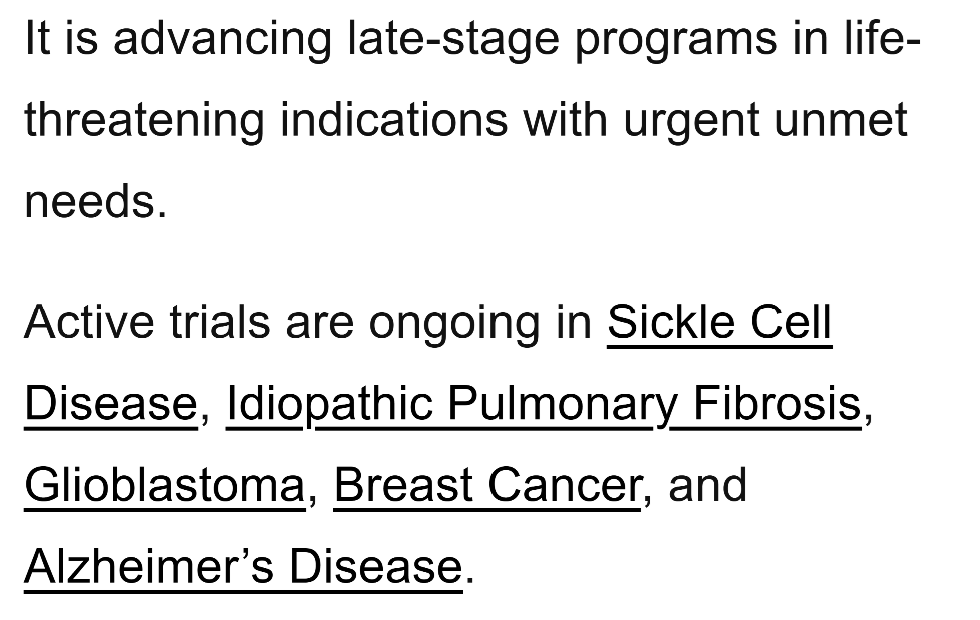
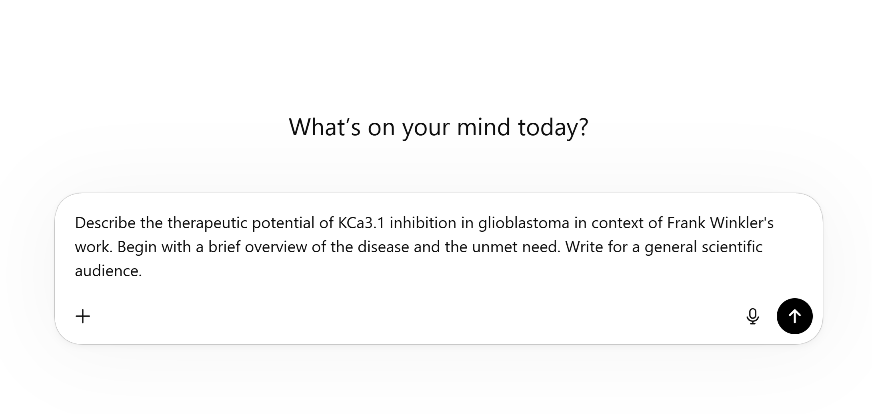
Furthermore, if you take a look at their website and click any of their links for active trials or additional trials to be launched, the link takes you to a prompt in ChatGPT (of note, their platform uses OpenAI’s large language models and they are funded by the company). I guess they don’t want to spend money yet on communications or any sort of design to communicate their work thus far.
A proud moment for Canadians coast to coast
Despite this, both Variational AI and Biossil are doing extraordinary things in the AI-drug discovery pipeline. It will be exciting to keep up with clinical trials backed by both companies and it is great news for the Canadian biotech ecosystem.
Footnotes
1. Stealth mode – a stage in start-up world where the company keeps everything a secret until they acquire enough backing or funding, and proper intellectual property protections, to go public.
2. This technology sounds crazy. If you’re thinking – what the heck!?, don’t worry so am I. The majority of Biossil’s LLM process is not public yet.