
Reversing Protein Aging
How Scientists are Searching for Tools to Clean Up Old Proteins

Inflammation, oxidative stress, and other diseases arise during aging. Some of these symptoms are attributed to an accumulation of “old” metabolites in the scaffold that holds our body together. What if scientists could clear those metabolites? Take a read below as I describe the latest research news in the search to reverse protein aging.
What is the extracellular matrix?
A variety of processes occur in our bodies as we age. At the tissue level, our connective tissues become stiffer, our bone density decreases, and we lose muscle mass. At the cellular level, damage increases, clearance of waste becomes less effective, and proteins might not get manufactured properly. Some of these proteins might be targeted by metabolic products and cause damage to the extracellular matrix.
The extracellular matrix (which I’ll refer to as ECM) is a mesh of proteins that holds together and gives structure to cells and tissues in the body. In this way, it’s almost like a corset, or shapewear, for our tissues. It also plays important roles in cell-to-cell signalling and the proper functioning of tissues. Over time, the proteins present in the ECM that create important structural bonds will be modified. These modifications eventually lead to the ECM losing its vital elasticity which plays roles in development and differentiation.
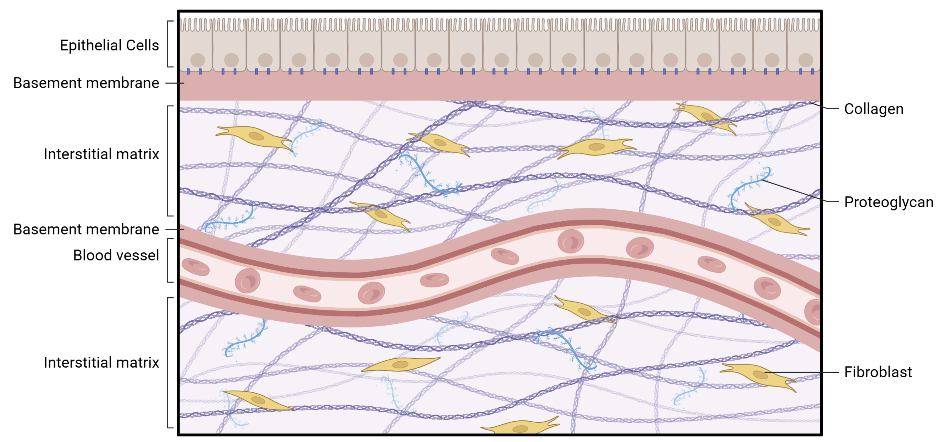
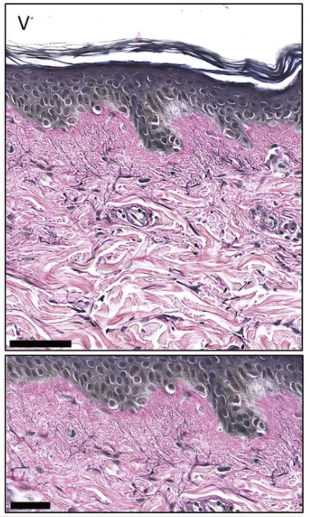
The ECM is damaged during aging by advanced glycation and lipoxidation end products
Glycation and lipoxidated proteins are small, modified molecules, associated with chronic diseases. This group is termed advanced glycation end products (AGEs) and are produced from normal metabolic reactions in the body to break down sugars, proteins, lipids and other macromolecules in the body. Furthermore, advanced lipoxidation end products (ALEs) are modified proteins that arise from breaking down small molecules, specifically subunits of proteins.
Both ALEs and AGEs activate the Receptor for Advanced Glycation End Products (RAGE) which in turn promotes chronic inflammation by engaging the body’s immune system. One very common AGE is Nϵ-carboxymethyl-lysine (CML). Think of CML as a key for the RAGE door. Once it is present, it can unlock RAGE and open the door to inflammation and other conditions like diabetes, neurodegeneration, and aging.
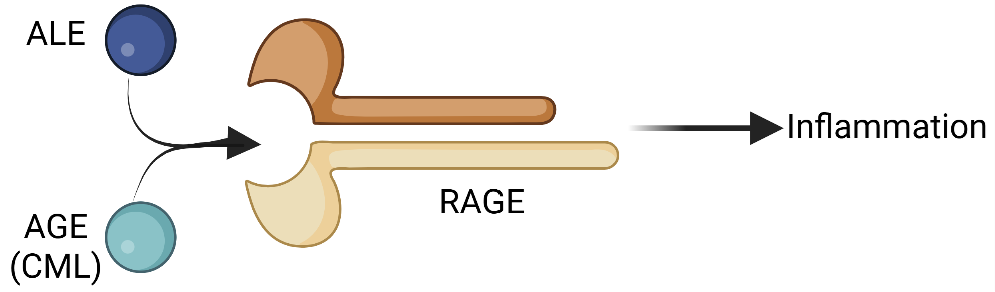
Nϵ-carboxymethyl-lysine (CML) is found in high levels in “older” proteins
So now we know that AGEs, specifically CML, play a role in aging and other diseases. How do we target this chemical? The problem is that the human body does not have a pathway that naturally inhibits these modified proteins once they’re formed in tissues – leaving no existing means to modulate with drugs. However, in July of 2026, Revel Pharmaceuticals developed an enzyme that can destroy the reactive version of CML.
CMLase breaks down CML by oxidation
The researchers targeted CML specifically because it is found in high levels in “older” proteins during aging. CML actually exerts some of its negative effects by disrupting ECM signalling and accumulating in tissue walls and membranes. In the aging field, CML accumulation and activation of inflammatory pathways was always thought to be an irreversible process.
To overcome this challenge, researchers used a large-scale computational screen to search for a powerful protein that could break apart CML. This method, popularized in the 1970s, combines machine learning with real-life structural data to design novel proteins that can be tested through simulation for desired outcome or performance. Interestingly, they actually started their chemical screen with proteins from Hay/grass bacillus bacteria found in both soil and the GI tract of humans and marine sponges!
Following the screen, they performed direct evolution in order to engineer structures that degraded CML, termed CMLases. They ended up identifying a metabolic enzyme (scientifically called a glycine oxidase) from the bacteria Calidithermus roseus found in hot springs. They coined this protein CrGO. Another interesting screening technique they used to enhance CrGO’s ability to break bonds of CML were genetic screens. Here, they tested multiple CrGO genetic variants to see if changes in the DNA sequence could enhance the enzyme’s ability to break down CML.
computational screen ➡️direct evolution ➡️structural engineering ➡️genetic variant testing ➡️final molecule design
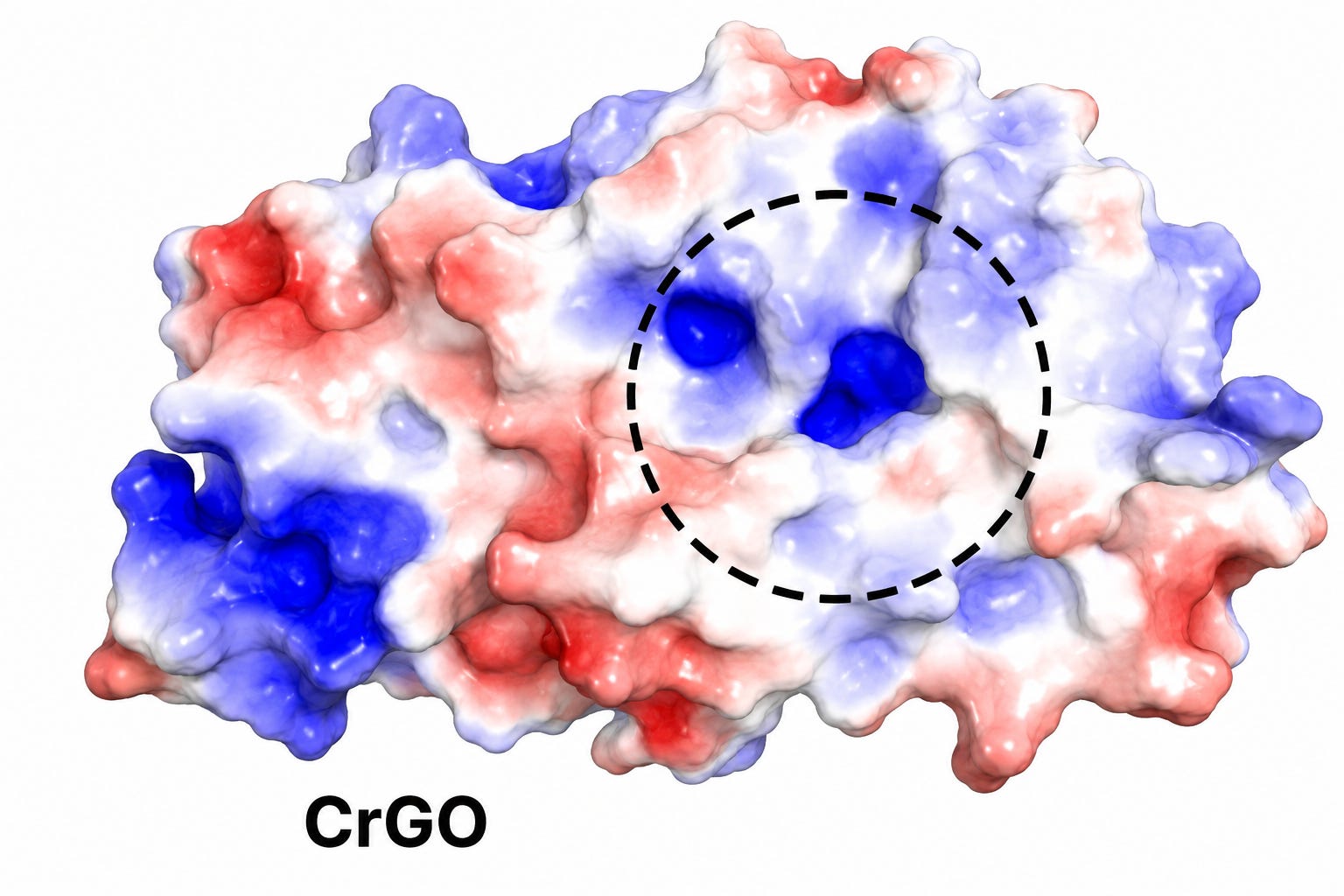
How does CMLase work and how was it tested?
CML accumulates in tissues like the eyes, skin, and kidneys. To test the activity of CMLase in a relevant model, researchers used retinal total protein extract, hemoglobin, and collagen all from sheep. CML levels were measured after treating with CMLase and resulted in significant reduction of CML level and its modifications (think of CML leaving ,modifications like fingerprint smudges on proteins wherever it accumulates). Importantly, the developed CMLase was able to modify 30 out of the 33 protein modifications on the surface of CML that increase its pathogenic effect. Of these modified sites, more than half were effectively targeted by CMLase. However, some sites on CML are more important than others for its function – and it will be vital to continue to engineer CMLase to target essential spots of CML at a higher effectiveness rather than a low-efficacy target of all sites.
Next, CMLase was tested directly in aged human eye lens, skin and arterial tissue. Crystals found in our lenses are some of the oldest proteins found in humans, which means CML has years to accumulate in those tissues. In lens from a 64-year old donor, the effect of CML was measured by its modifications on other proteins, which decreased by 45% after addition of CMLase. The presence of CML alone decreased by 78%. Researchers then took sections of skin and artery tissue and treated them with CMLase – which reduced CML levels by more than 70%.
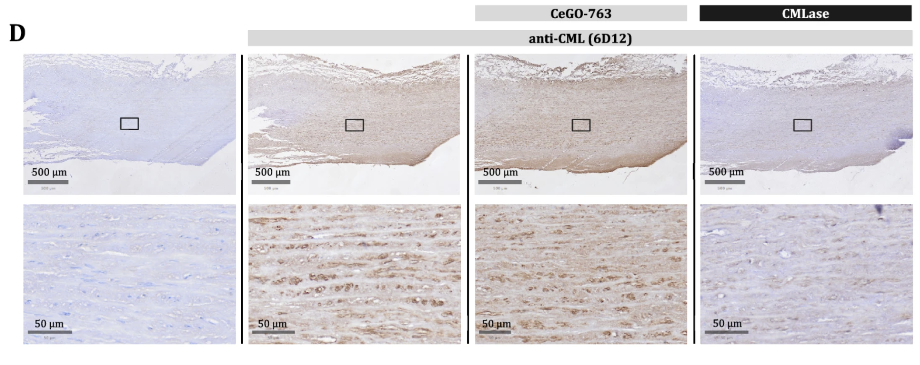
It’s important to note that both of these models are isolated. The lens tissue was ground up into solution and then tested with CMLase, while the aorta and skin were sliced thinly and then treated with CMLase. There was no testing on complex cellular organisms or with mixed tissue. Although mouse studies are not suitable to test CMLase efficiency as their life span is too short, some sort of animal model will need to be used to test for toxicity and other side effects of CMLase.
What does this mean for reversing age?
The million dollar question! This is exciting scientific work because it addresses a limitation in the metabolic field. The scientists showed for the first time that an AGE, in this case CML, can be degraded and its modifications can be reversed. However, it remains unknown if this reversal and decrease in CML level will actually lead to silence the downstream effects of RAGE that include chronic inflammation and decreased tissue function. Revisiting our lock and key metaphor, CMLase is like rust on the CML key for the RAGE door. It accumulates on CML and changes its shape, ultimately leading to the inability of the unlocking of the RAGE door and what scientists hope will mean a decrease in RAGE-induced inflammation.
As I mentioned previously, it is vital to test CMLase in a more complex model. The isolated eye, aorta, and skin tissues are a good proof of principle experiment; however, they are the perfect environments for CMLase to reach its target and degrade CML. What will happen when it has to compete with other proteins and in a complex and intact living organism? Will it target other proteins besides CML as well?
These questions, and more, will need to be addressed by scientists before any discussion of reversal of aging effects is entertained. However, it does open the door for further optimization of CMLase (or other molecules like it) and emphasizes the importance of age-related protein and metabolic modifications that could be targeted to increase quality of life.
Thank you so much for reading! Let me know what you think in the comments, and see you next time!